
ANALYSIS REPORT ON INNOVATIVE MODELS OF TEA BRAND BUILDING (2025) Officially Released
As the world's largest tea producer and consumer, China's tea industry holds significant strategic importance in promoting rural economic development and preserving traditional culture. However, the industry currently faces practical challenges such as lagging brand development and insufficient international competitiveness. Against this backdrop, the Tea Industry Committee of China Association for the Promotion of International Agricultural Cooperation, in collaboration with the Modern Advertising Research Center of Renmin University of China, and with the support of over 30 tea regulatory authorities, associations, and enterprises nationwide, has completed the Analysis Report on Innovative Models of Tea Brand Building (2025) after six months of in-depth research and discussion. The report was officially released on November 26.
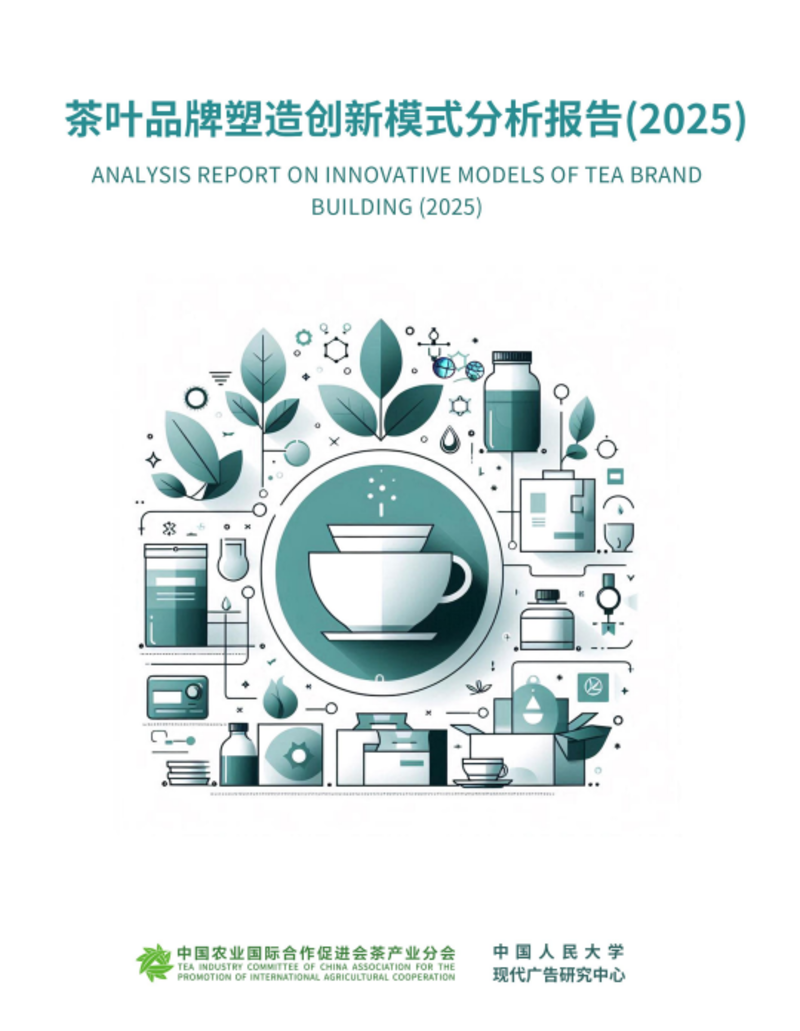
This report comprises ten chapters, including: An Overview of China's Tea Industry Development; Characteristics of China's Tea Market and Consumers; Current Status, Opportunities, and Challenges for Chinese Tea Brands; Case Studies of Chinese Tea Brand Building; Application of the "Six Forces Model" for Tea Brand Innovation; Innovative Models for Tea Brand Building Based on the Six Forces Model; and Recommendations for Advancing Innovative Models in Chinese Tea Brand Building. It aims to provide the industry with a set of systematic analytical tools and actionable references.
Its core value is primarily reflected in the following aspects:
● Multi-Dimensional Insights into the Industry Status: The report systematically outlines the development, market structure, and consumer characteristics of China's tea industry, highlighting a quadruple evolution trend towards "younger demographics, functional benefits, brand orientation, and digitalization." It finds that consumer demand is shifting from singular health benefits to compounded emotional value and lifestyle alignment, posing new challenges to traditional brand narratives.
● Rich Practical Case Studies for Reference: The report collected and selected 31 exemplary cases of tea brands as an appendix, providing in-depth analysis of their innovative practices across dimensions such as product, supply chain, brand storytelling, and consumption scenarios. These cases cover a spectrum from traditional famous teas to new-style tea drinks, and from regional brands to leading enterprises, offering valuable reference samples for different types of market players.
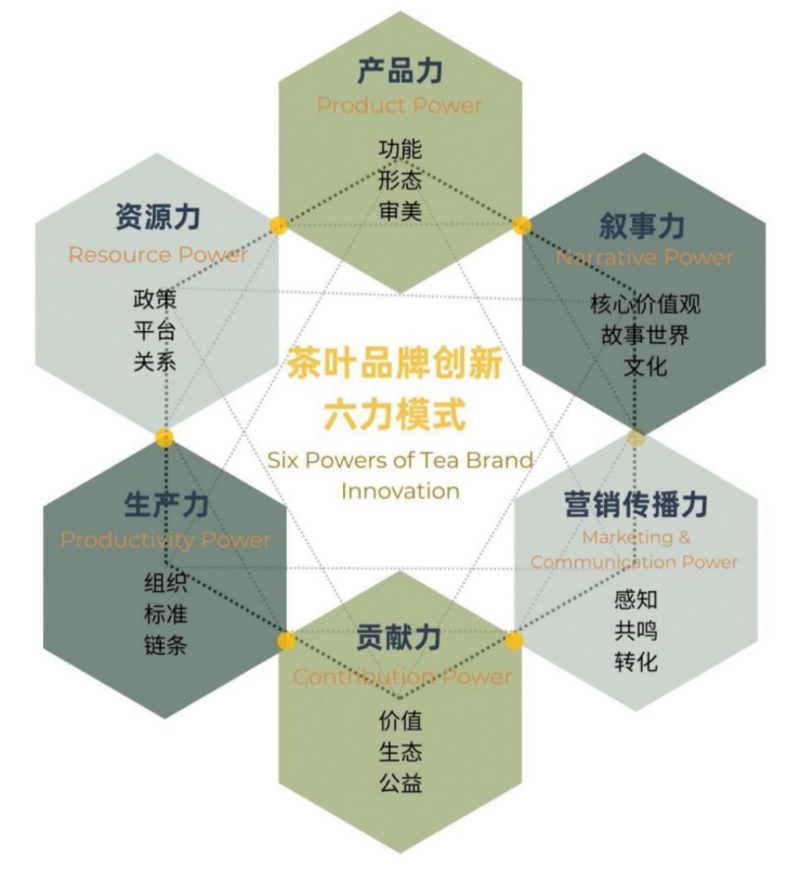
● Groundbreaking "Six Forces Model for Brand Innovation": Based on extensive research, the report for the first time distilled and constructed the "Six Forces Model for Tea Brand Innovation," encompassing Product Force, Narrative Force, Resource Force, Productivity Force, Marketing & Communication Force, and Contribution Force. This model provides a comprehensive analytical framework and evaluation dimensions for tea brand building, assisting enterprises in diagnosing their own strengths and weaknesses and clarifying focal points for future development.
By integrating theoretical construction with empirical analysis, this report systematically addresses key issues in the brand building of Chinese tea. It offers intellectual support and decision-making references for the branding transformation of China's tea industry. The report suggests that the future development of the tea industry should focus on strengthening strategic brand awareness, deepening the exploration of cultural connotations, promoting digital transformation and upgrading, and building a sustainably competitive brand ecosystem.
To facilitate the translation and application of the research findings and to help industry practitioners better understand and utilize them, our association will systematically deconstruct and provide in-depth interpretation of the Analysis Report on Innovative Models of Tea Brand Building (2025), gradually releasing the report's value. This effort aims to assist China's tea industry in transitioning from "product output" to "value output," establishing stronger brand influence in the global market.

Contact Us
Add: 414, Institute of Quality Standard and Testing Technology for Agro-products of Chinese Academy of Agricultural Sciences, No. 12, Zhongguancun South Street, Haidian District, Beijing, China
Email:typ@withworld.cn
Tel:+86 10 53647310